French Riviera / Côte d’Azur
The fact is that living in California, I was never keen on visiting Côte d’Azur. Here, we have plenty of sunny days, an ocean nearby, a plethora of palm trees, and vegetation that thoroughly resembles the Mediterranean vegetation. With the advice of my friend Laura, who knows the area well, I decided to plan a few days in the southern-most part of France, the French Riviera, something that I would not regret. What I would discover was centuries of history, intriguing medieval perched villages, art everywhere, and gastronomic, even if simple, dishes with an emphasis on fresh and local products.
“Riviera” in Italian means “coastline”. So, the name French Riviera stands for the area of France bordering the Mediterranean Sea that spans from Saint Tropez to Cannes, to Monaco. The name, “Côte d’Azur“, comes from Stephen Liegeard’s book, La Côte d’Azur, which he published in December 1887. “Azur” describes the astonishing blue-cyan color of the Mediterranean when the sun shines and the sea is calm.
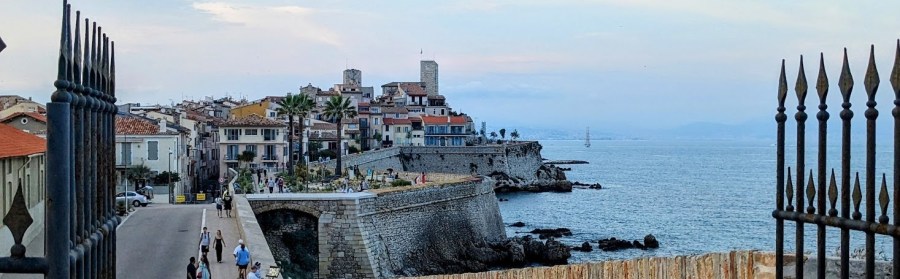
Our base was in Antibes, in the Vieille Ville or “the old town”. Antibes, or in Greek “Antipolis”, was created by Greeks in the late 4th century BC. Its name means “the city opposite” either Nice or the island of Corsica. In the 15th century, Antibes came under the French rule. Since the 19th century, it has become popular with vacationers and retirees. It is a splendid choice to make it your vacation base due to its well-located position between the more famous Cannes and Nice. The medieval old town, with narrow, cobbled streets, was a joy to wander. Everything from groceries, fashionable boutiques, pharmacies, beaches, and last but not least, the farmer’s market was in walking distance. The flowers, especially oleander and bougainvillea, snuck their way through stones and pavement or were hanging on the streets from pots.


Antibes has a small farmer’s market located right by the city hall, or what the French call, “‘l’Hôtel de Ville”. The market is usually small, but on Saturdays and Sundays, there are more than two dozen vendors from nearby villages. We arrived on a Friday, so the first thing we did the next morning was stroll through the farmer’s market. So thrilled was I, to find small elongated strawberries that bear resemblance to the wild strawberries I used to forage as a child. I can also vividly recall the fresh macaroons with exotic fragrances, like yuzu or black currant, and the smile of the charming old gentleman while packaging them. The spice table was overwhelming with a multitude of spices and dry herbs. Our favorite was the cheese stand, with many fresh kinds of cheese that I had never heard about, and small yogurt pots with flavors like lemon, apricot, and strawberry. The market is much smaller during the week, with just a handful of vendors. Luckily, the cheese vendor was there to stay.


I heard the farmer’s markets in Nice and Cannes are bigger and more opulent. I wish I had time to check them out, but so far, the Provencal market of Antibes was just what we needed.
Tip: near the market, there is a small boulangerie, Aux Amoureux Des Pains, with a rich assortment of patisseries, all of them delicious. I especially enjoyed their small-size breads. They also have sandwiches and sweet patisserie. Get your baked goods from here, and your veggies, fruits, and cheeses from the nearby market, and you have a great breakfast or brunch.
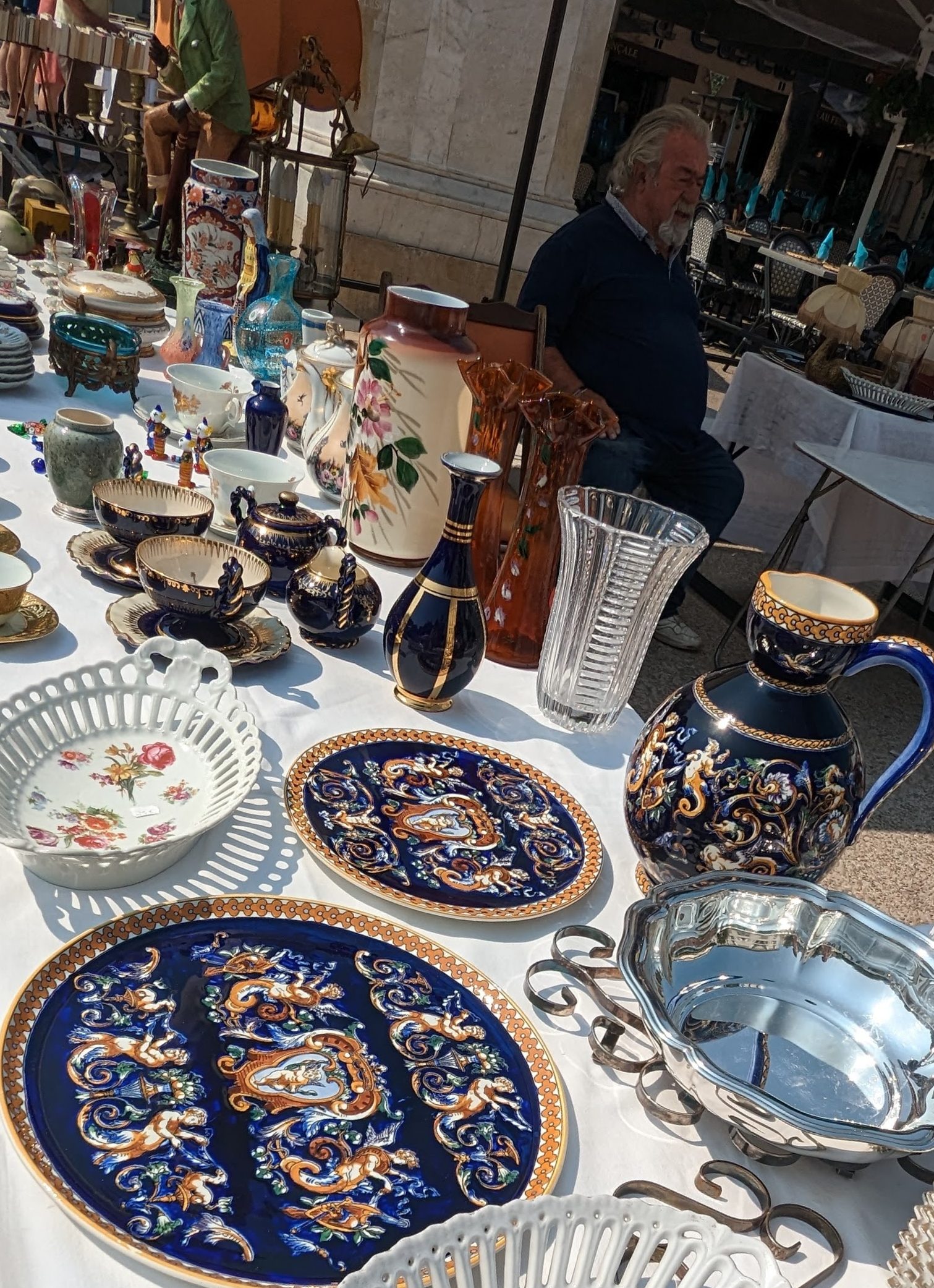
Love markets as much as I do? Surprise, on Saturday morning I woke up discovering an antique market, or Brocante, as the French say, in a square right by our apartment. Early morning, the vendors were setting up their tables and we browsed a little before heading to the Provencal market to secure our breakfast.
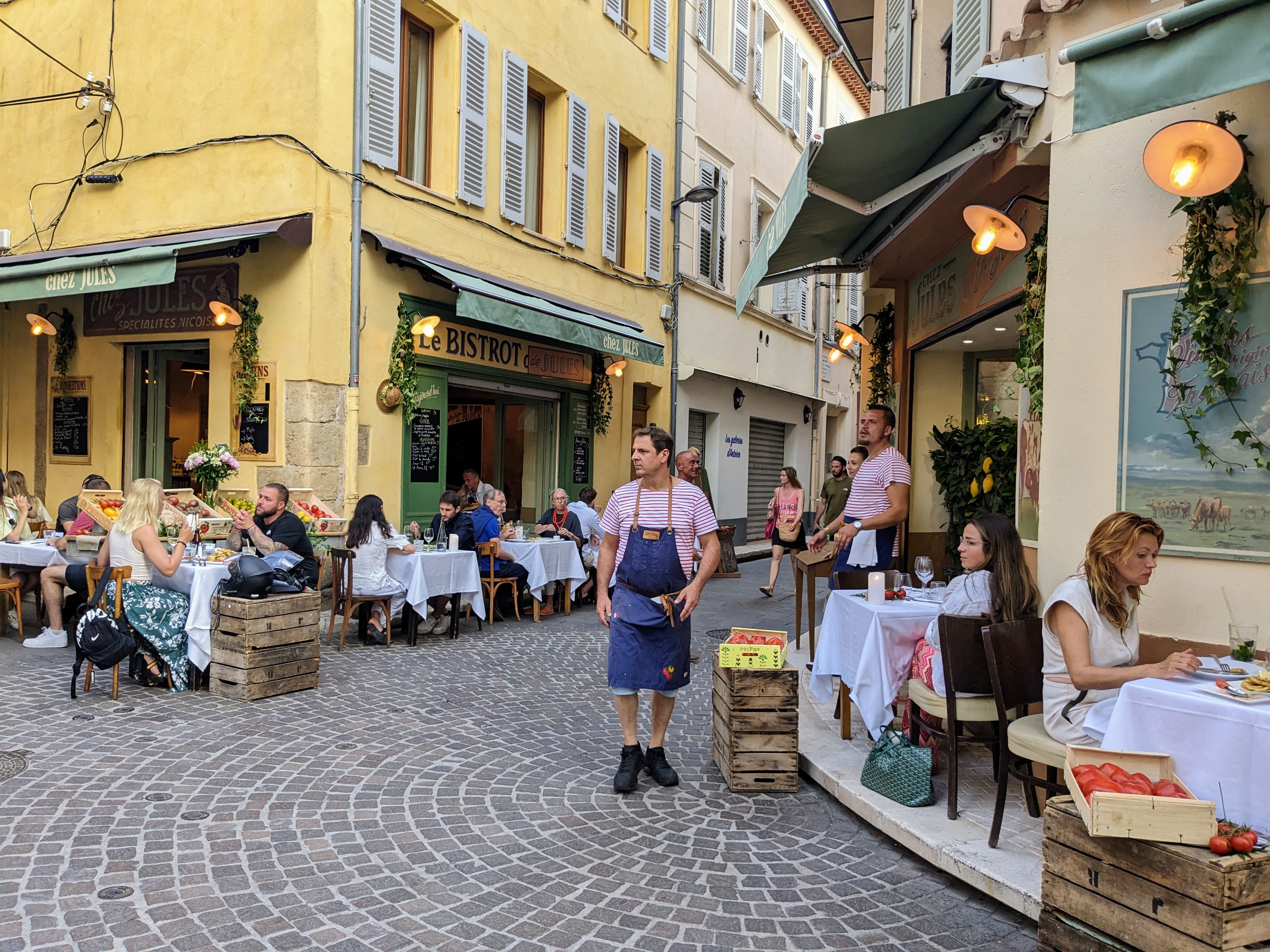
On the topic of fresh local products, I have to mention one restaurant that we thoroughly enjoyed while there. Bistro Chez Jules in Vielle Vile has the unique quality of sourcing vegetables and fruits from the nearby hills of Nice. Their dishes are simple and refined, but bursting with flavors from the sun-ripe vegetables used in the daily menu. The décor is neat, featuring crates of fresh in-season vegetables or fruits. Pay them a visit while you are there! You won’t be disappointed. Just be sure to have a reservation, or show up right when they open.
We are here in Picasso Country- Picasso lived here in a top-floor studio in Grimaldi Castle in 1946. Today we can admire the works he created here in the same château that houses now Musée Picasso. In 1990 Jacqueline Picasso bequeathed more works by Picasso to the museum. Today the collection totals 245 works by Picasso: paintings, ceramics, etchings, drawings. The terrace boasts a beautiful view of the Mediterranean and the tree-covered Cap D’Antibes..


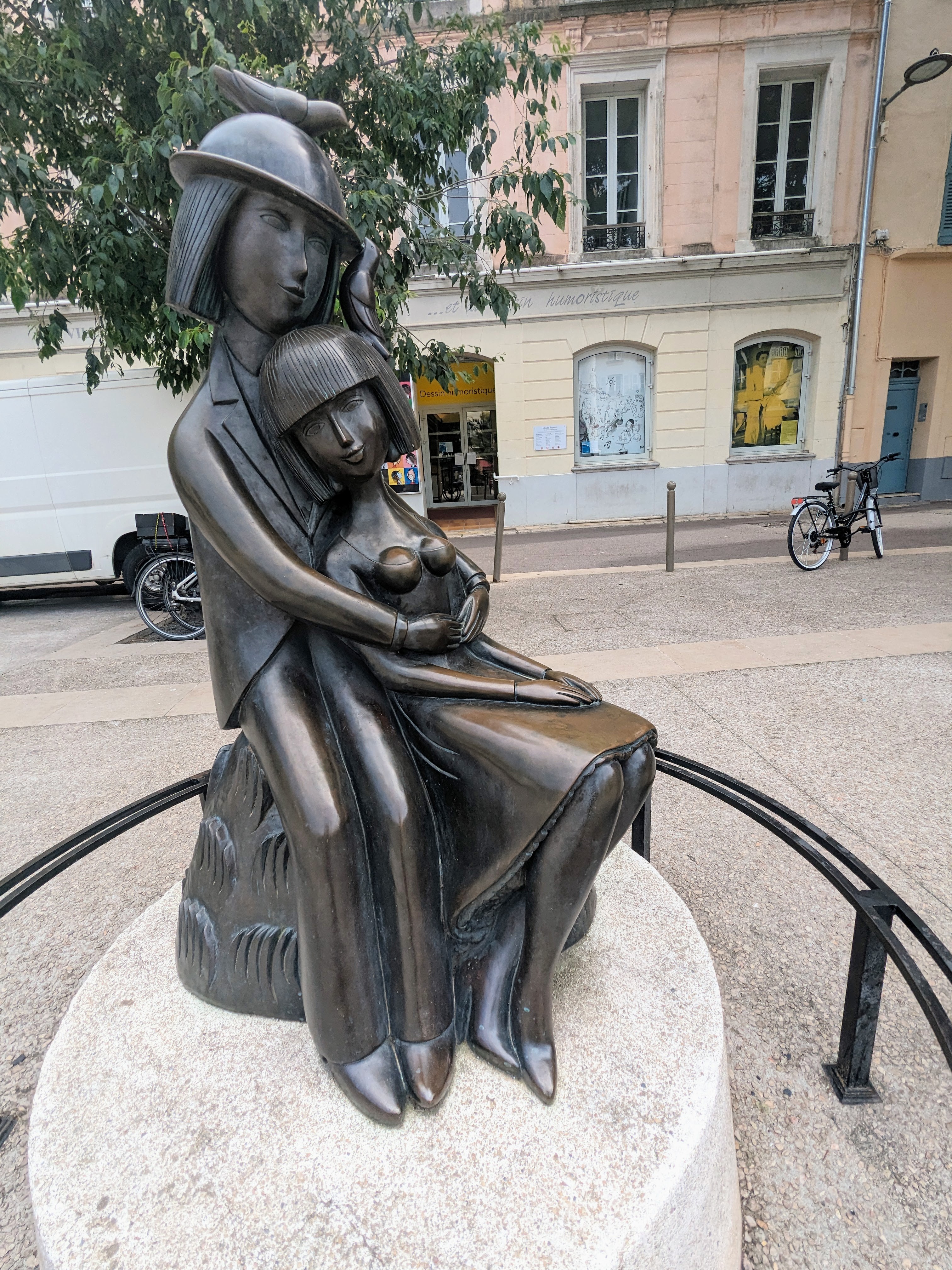
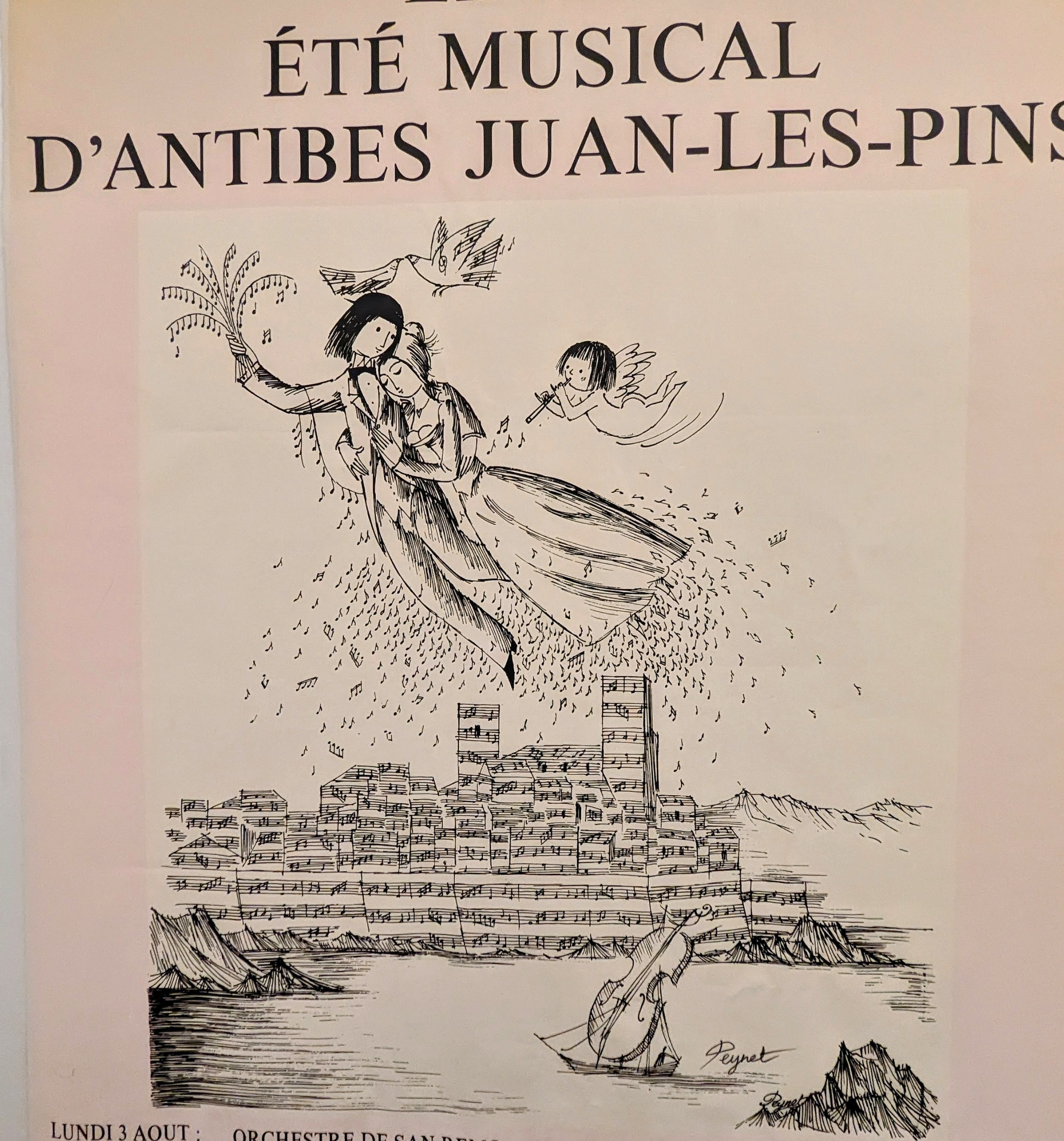
Another museum that caught my attention was Musée Peynet et du dessin humoristique or Peynet and Cartoon Museum. As my son is into cartoons and Japanese anime we both decided to check out this small museum. Raymond Peynet was a French Cartoonist born in 1908 in Paris. He is known as the creator of l’Amoreaux or “The Lovers”, famous not only in France but in Japan where there are other two Peynet museums. Discovering the world of Peynet was quite a revelation for me. I enjoyed his sketching, wish I knew more about his work. There was this poster of him about Été Musical that to me fully depicted the joyous musical atmosphere of the day of Fête de la Musique – June 21st. The museum has short hours for visits, be sure to check the schedule beforehand.
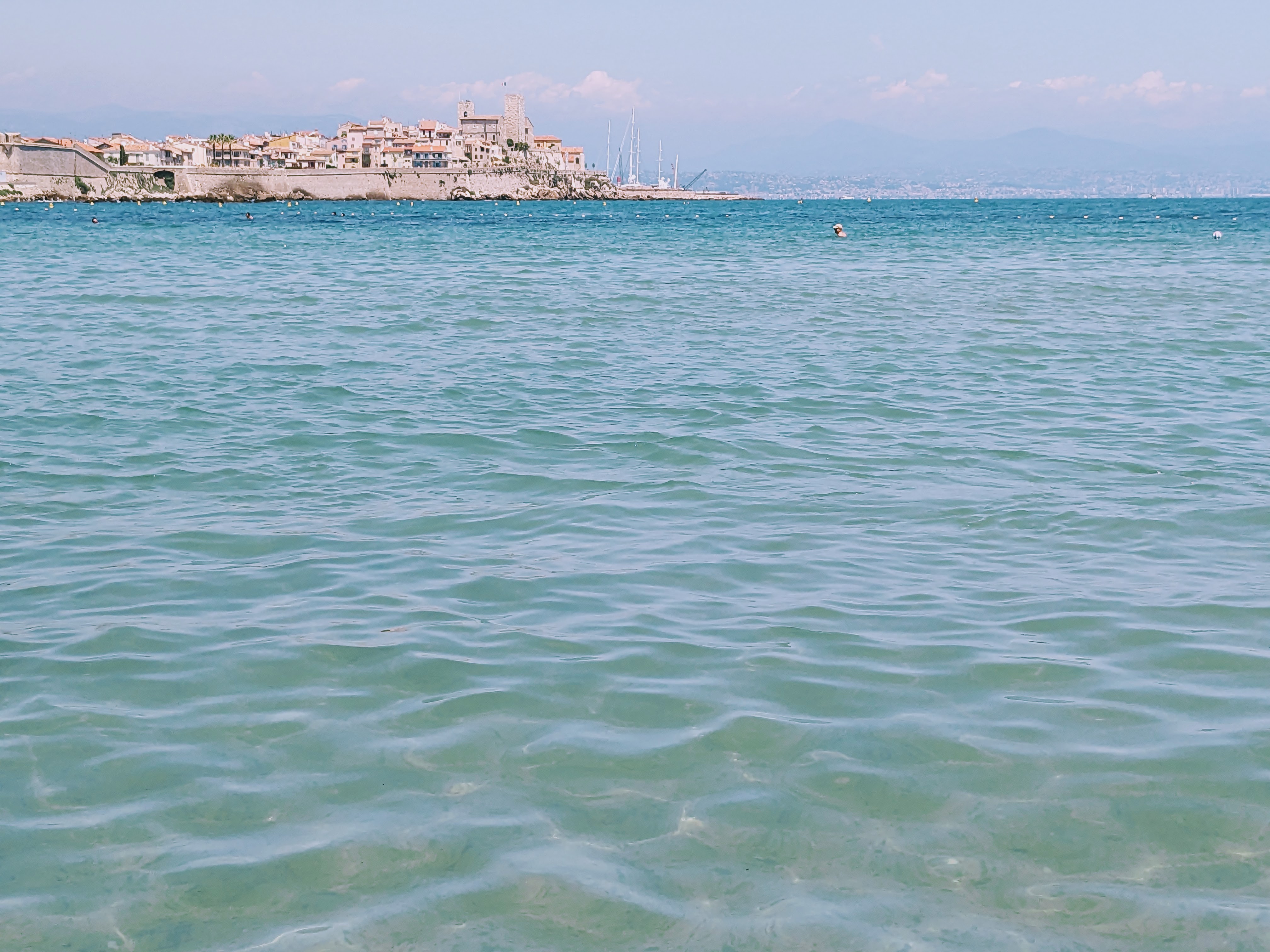
Of course, it can’t be the French Riviera without the beaches. We did check out two of them. Plage de la Gravette is the beach by the Antibes’ harbor. It’s a small beach with some sand and lots of small stones in the water. The atmosphere is vibrant, mostly young people. There are showers on the beach if you want to rinse the salty water. Getting in the water is a lot of fun since the stones are slippery and it’s very tricky to find your balance. Getting low in the water will help you balance better.
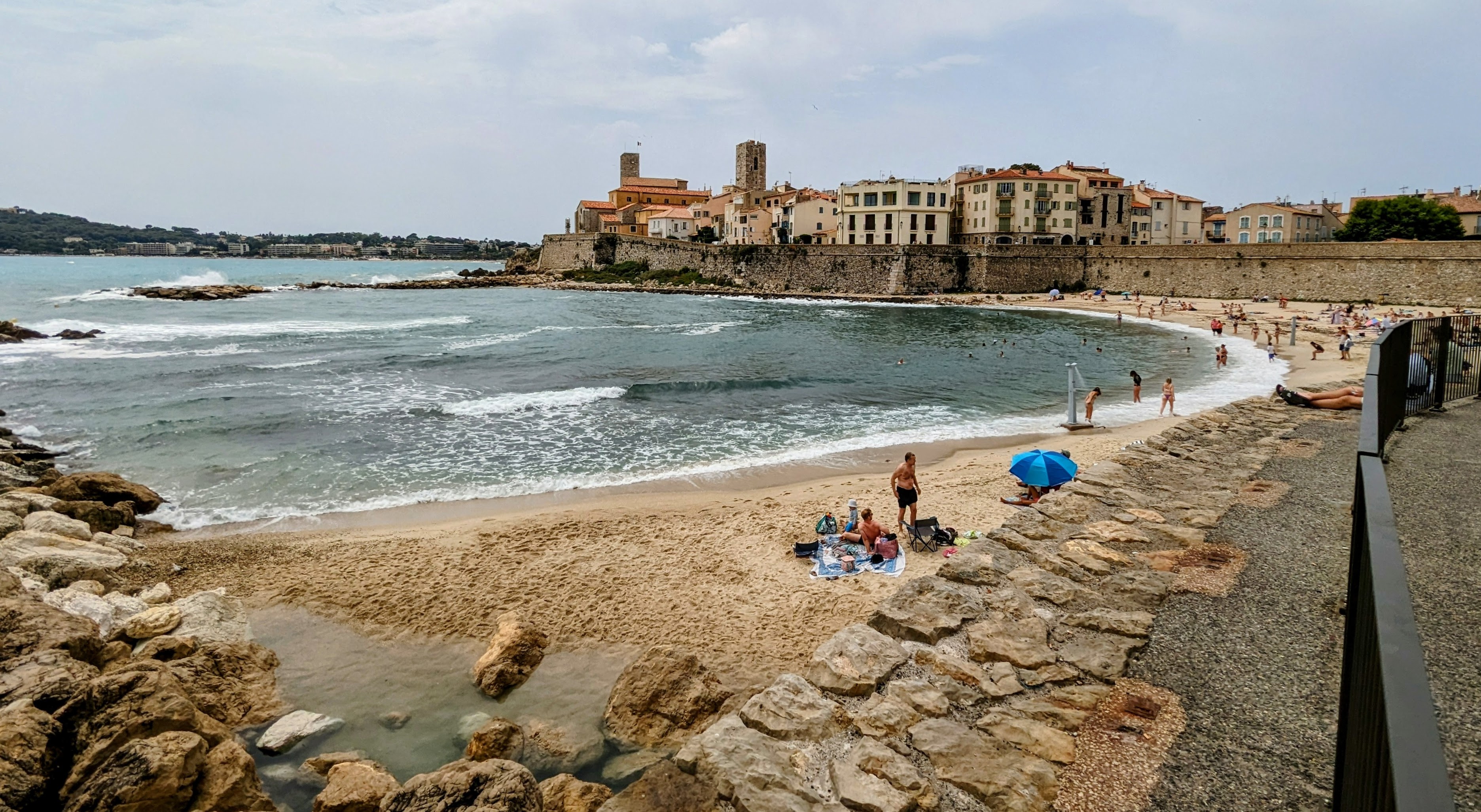

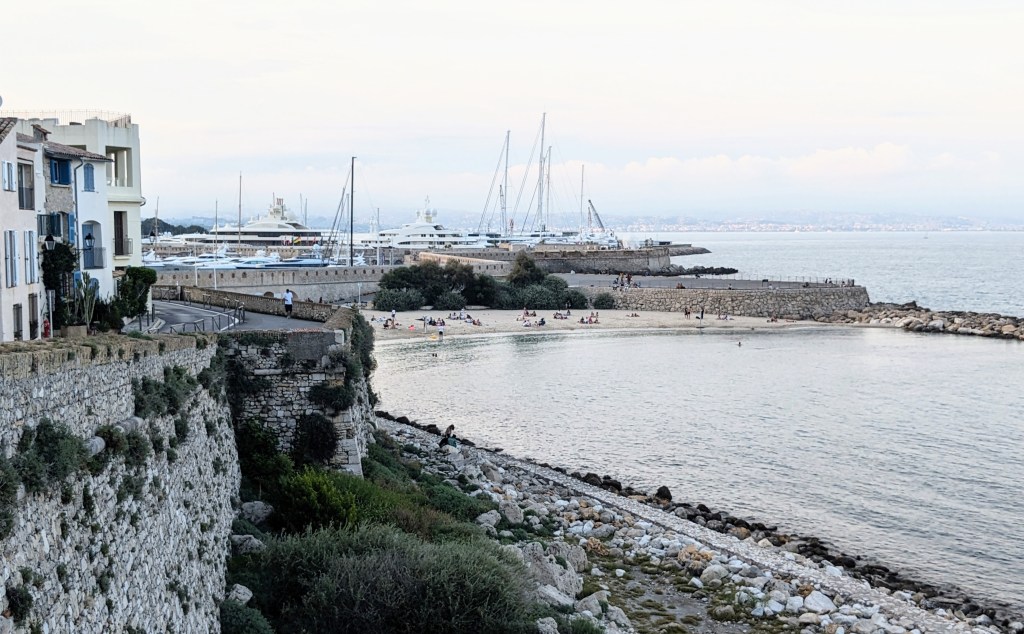
Our favorite beach was Plage du Ponteil. While a little outside of the old town this beach is larger, still sandy, and just a little less stones in the water. What won me over here, were the views of the old town. I can blissfully recall swimming in the azure waters with the view of the Vielle Ville’s ramparts.
The Antibes Cathedral or Cathédrale Notre-Dame-de-l’Immaculée-Conception d’Antibes is a Roman Catholic church with a beautiful Italian façade that has an active role in the local life. I was lucky to witness a religious wedding and also a beautifully sung mass.
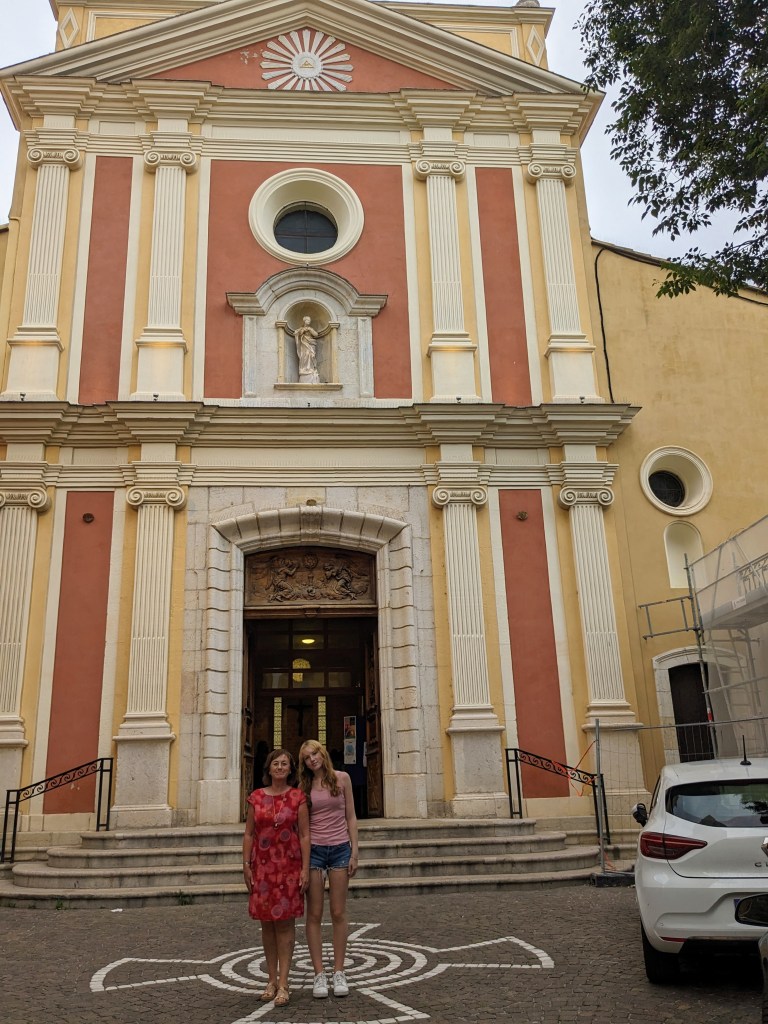
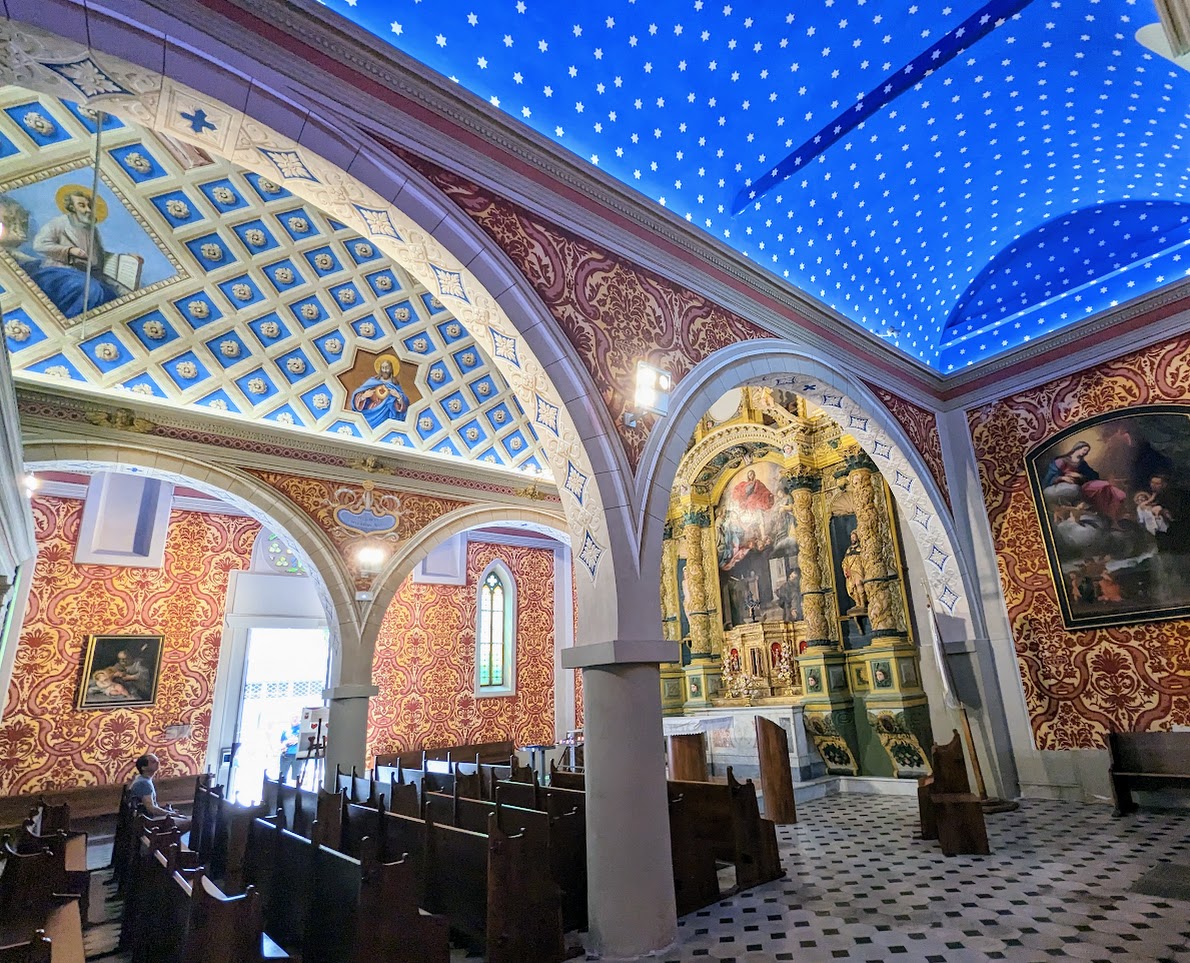
One surprising small church, tucked away on a alley right by our apartment was Chapelle Saint Bernardin or chapel of the Pénitents-Blancs. A rather insignificant neo-Gothic façade gave way to a mesmerizing interior. The chapel was erected in 1518 by the Brotherhood of the White Penitents of Saint-Bernardin. A rather inspiring attraction, to not be missed.

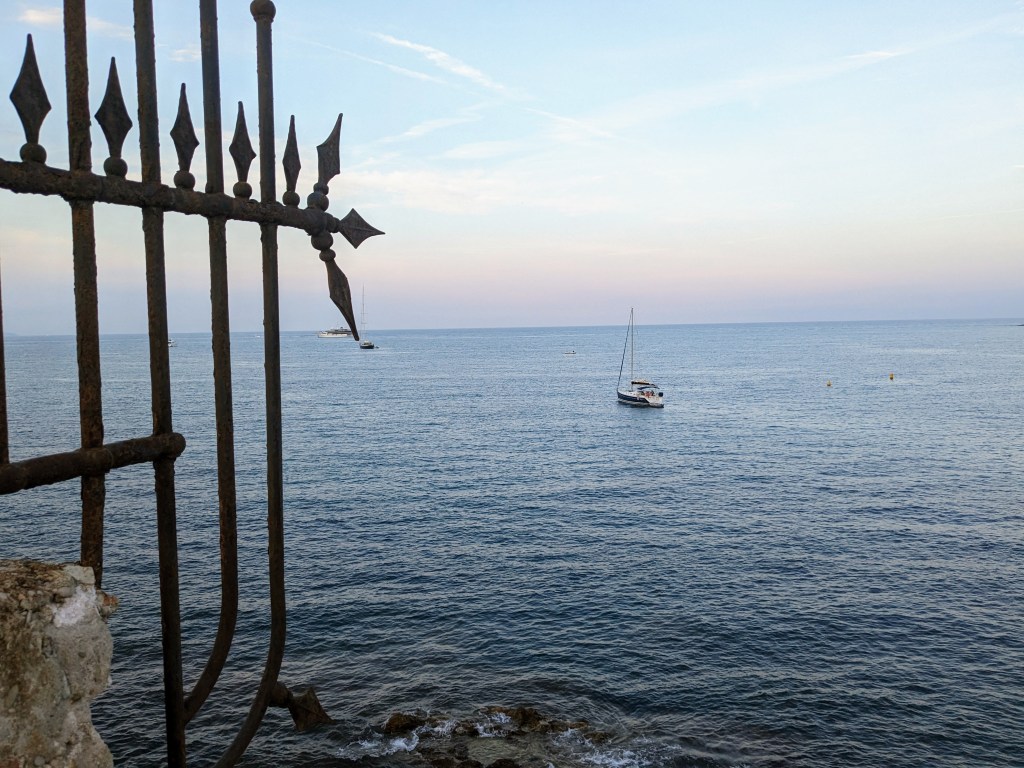
One of my favorite part of Antibes were the ramparts. There is a nice walkway from the harbor to the Musée d’Archéologie over the ramparts. The best view of the old city and the ramparts is from the top of the Musée d’Archéologie.

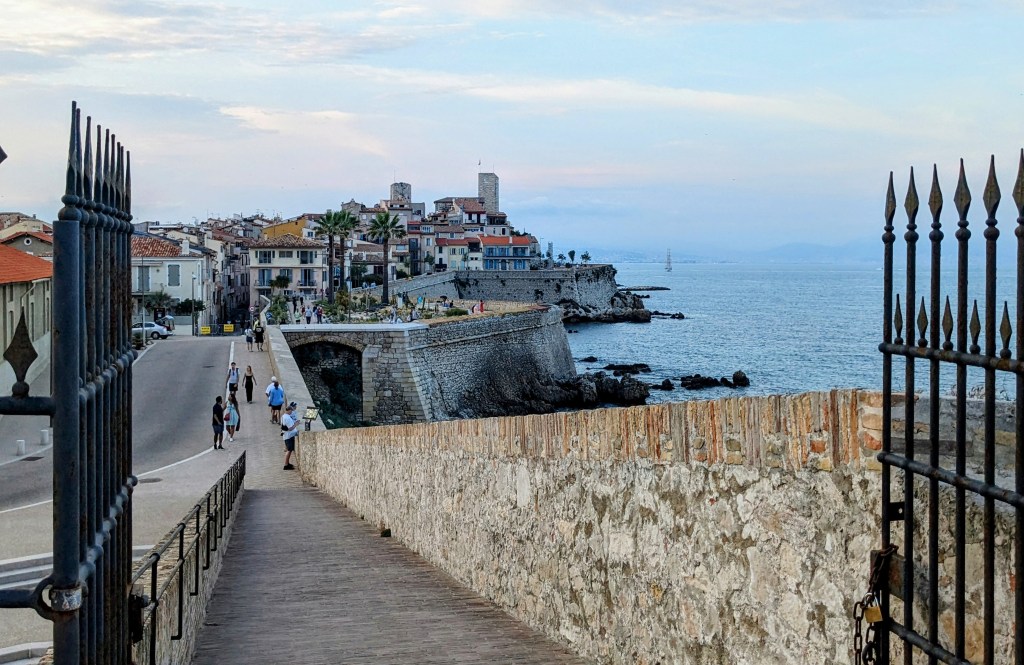

At the end of the long wharf – Quai de Milliardaires you will find The Nomade statue by Spanish sculptor Jamue Plensa. The Nomade is a monumental sculpture eight meters high of a squatting figure, made out of letters.
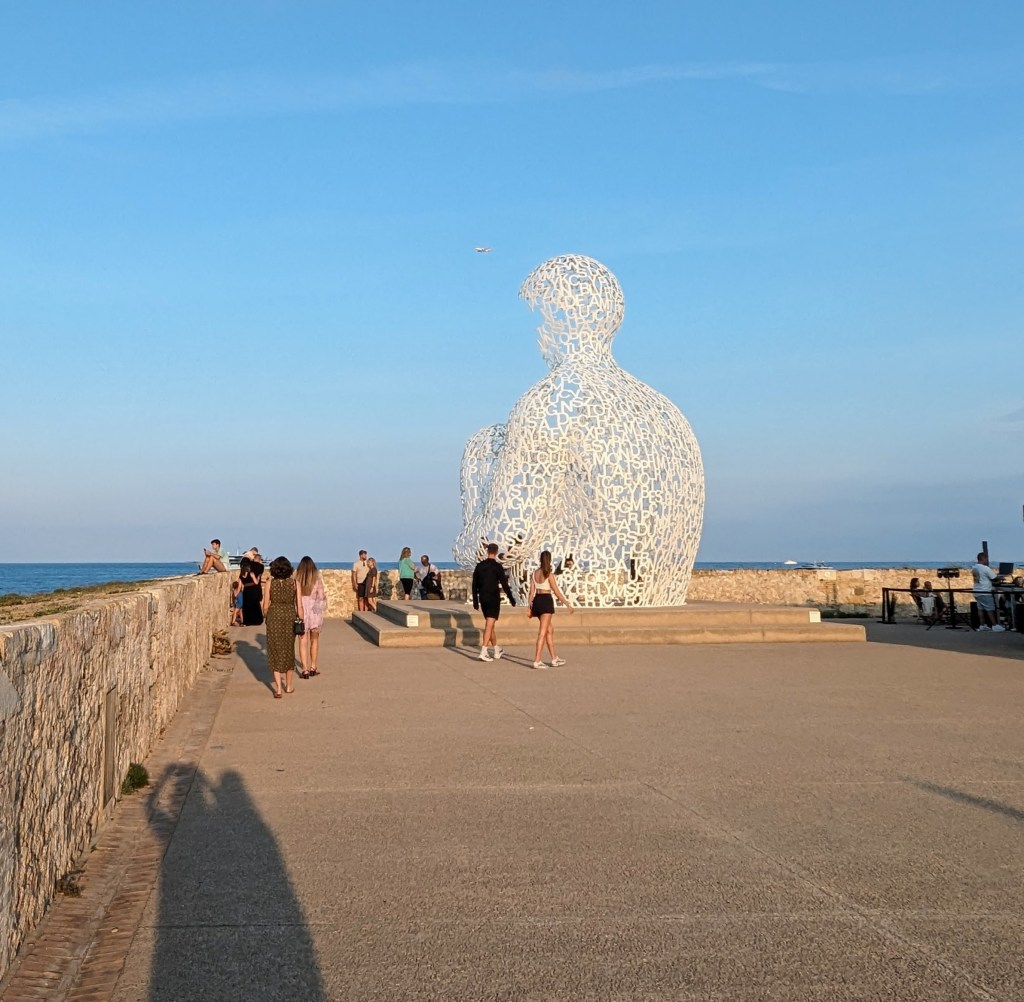
“I always imagined that our skin is permanently tattooed with text – our life, our experiences – tattooed, but with invisible ink. And then suddenly, somebody is able to decipher these tattoos; that person becoming a lover, a friend. That is probably why I work with sculptures like this, this human form composed solely of letters, like cells. It’s almost biological.”
Jamue Plensa
During the summer there is a small bar near The Nomade with music and dance. I imagine would be nice to just sip your favorite drink and dance under the stars. Definitely a must-try next time.
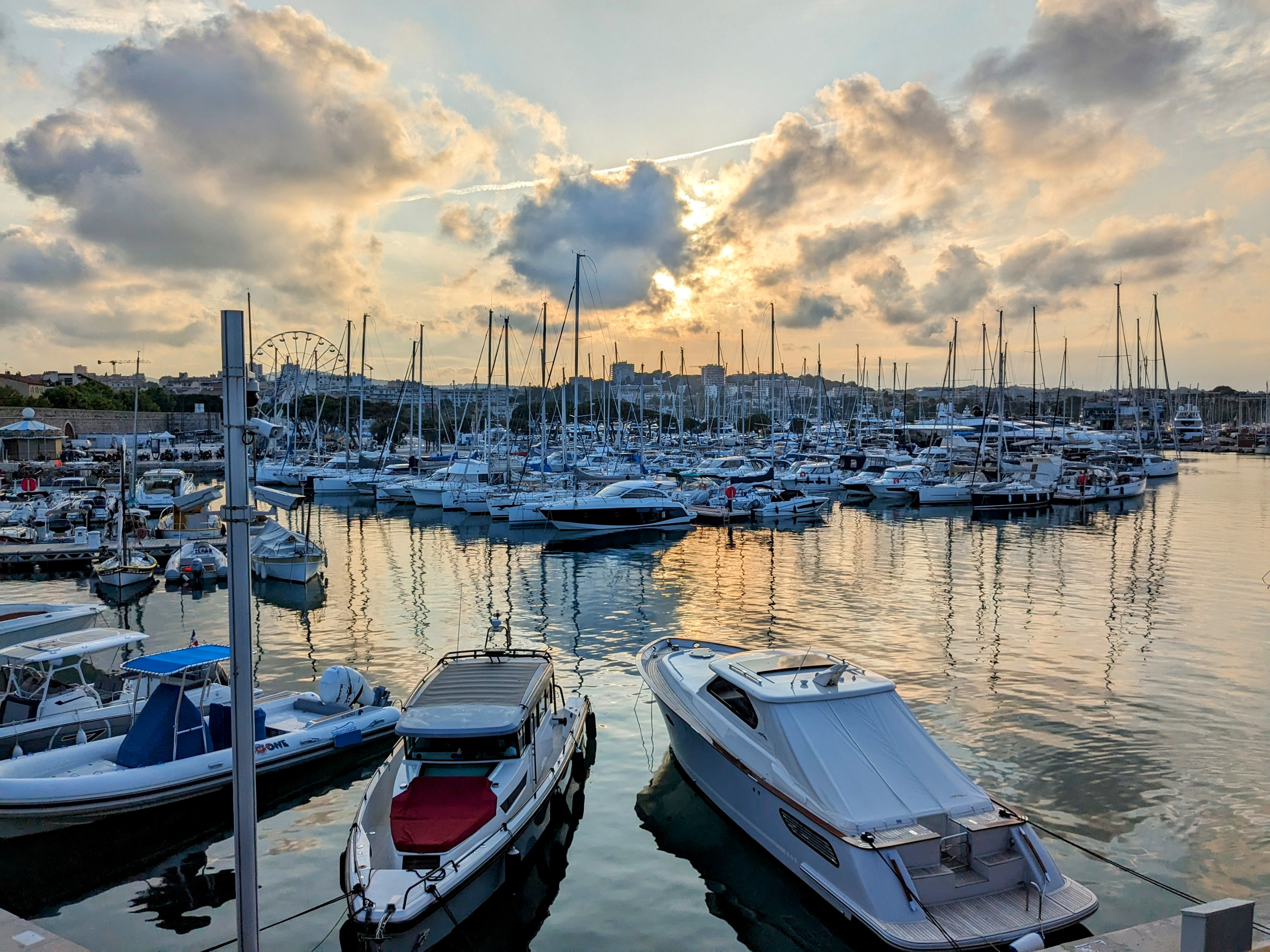
The harbor or Port Vauban is a pleasant area to stroll around and admire the million euros yachts stationed there, but the best would be to watch a sunset.
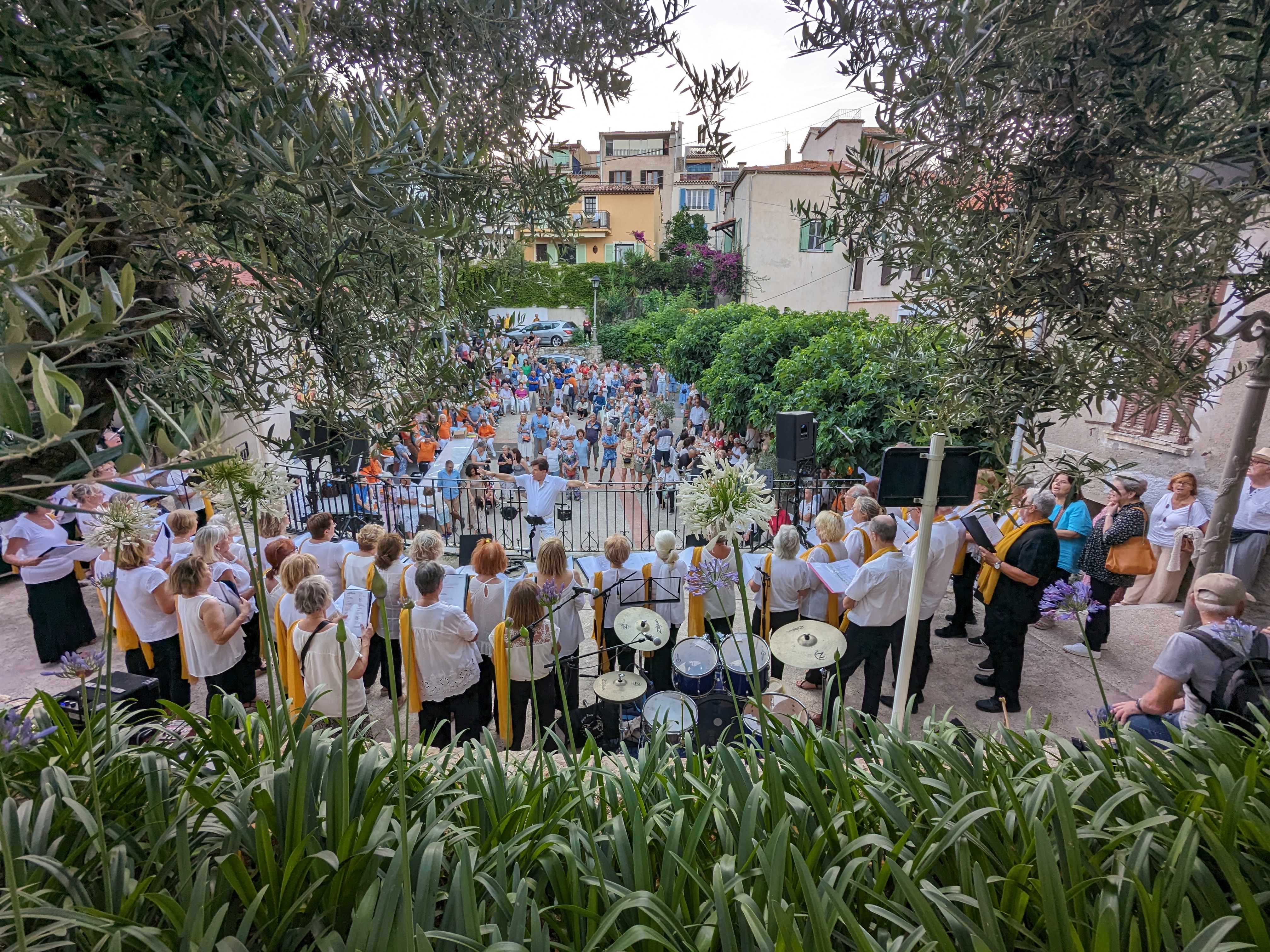
We were lucky to witness one of the most popular holidays in France: Fête de la Musique or the Music Day that takes place every year on June 21st. It is an annual music celebration that gathers residents and visitors together to enjoy music on the streets. There were free concerts all over the city and the people dressed up enjoyed the music, food, and drinks. The restaurants are booked days in advance and people linger at their tables listening to the music or strolling the streets from one band to another band. The idea of Fête de la Musique started in October 1981 when Maurice Fleuret at that time French Ministry of Culture discovered that out of France’s five million people, one young person out of two, played a musical instrument. He dreamed of bringing people on the street united by their love of music. The slogan of the celebration was “Faites de la musique” (“Make music”). The secondary purpose of this holiday is that professional music be free for the general public that day. I really enjoyed all the music concerts in Antibes but my favorite was the opera concert in Place du Safranier.
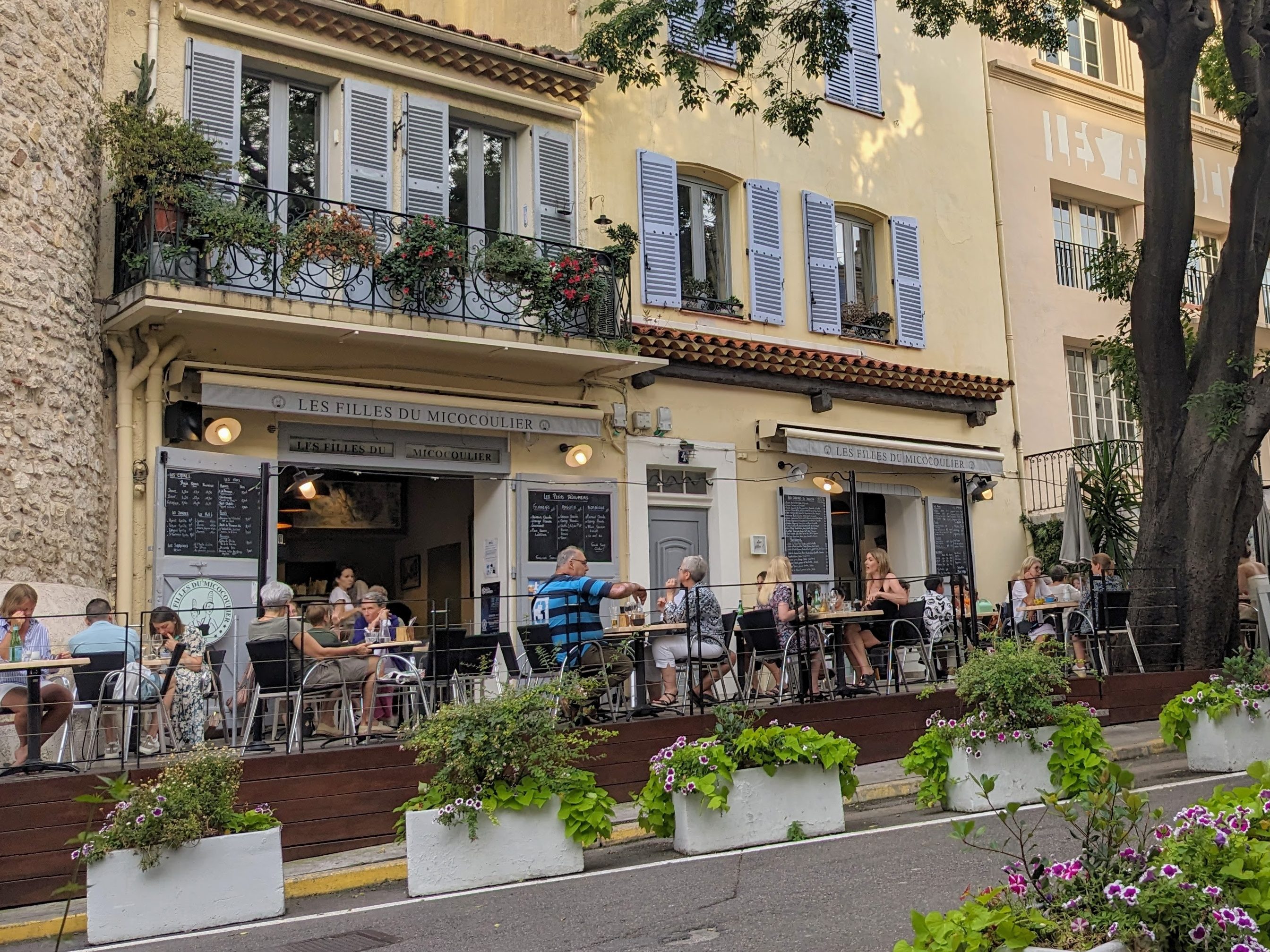
While in Antibes don’t skip the best crepes in town at Les Filles du Micocoulier right by the Marché Provençal aka Farmer’s Market. A wonderful place to sit, people watch and enjoy good crepes.
Antibes has a special place in my heart and while I consider it a wonderful city to base while in the area there is more to discover in French Riviera.

 Explore the world little by little